
EuroHockey is delighted to announce the two Hockey ID Championship trophies will be named in honour of Norman Hughes and Elsbeth Ruys, two pioneers of the format.
The trophies will be presented for the first time in August at the EuroHockey ID Championships in Mönchengladbach, a city synonymous with the rise to prominence of inclusive hockey for all abilities.
This year’s EuroHockey ID Championships will run from August 11th to 13th with the initial phases taking place at Gladbacher HTC before the finals take place in the SparkassenPark stadium.
***
The Championship 1 trophy will be named after Hughes who followed up a successful playing career, reaching the Olympic Games with Great Britain, to become one of the leading lights in promoting inclusivity in our sport through EuroHockey and, now, within the FIH.
It is a passion which has seen him awarded the Etienne Glichitch award for his work developing ParaHockey ID across Europe, leading the charge to make it a fixture at the EuroHockey Championships since 2011 in Mönchengladbach.
Fittingly, Hughes was honoured with a EuroHockey President’s Award at the same venue in 2023 and he continues to find new ways to grow the discipline.
At Easter, the first Hockey ID-specific umpire course took place in Den Bosch where he was also pitchside pulling the strings to make instructional videos as part of the EU funded Love is All project.
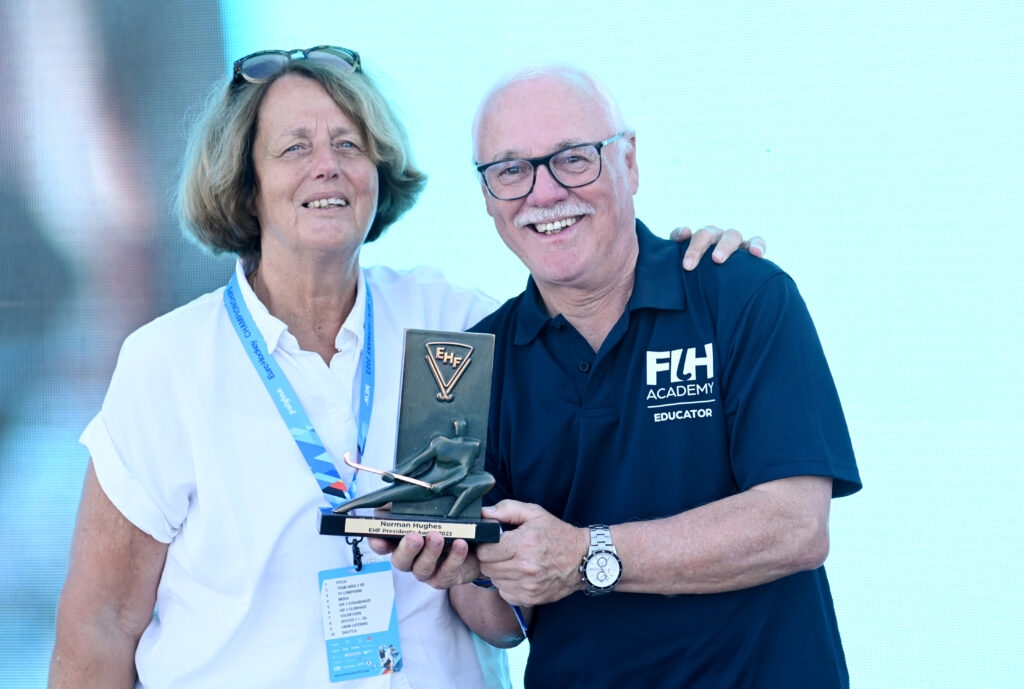
Gino Schilders – one of his colleagues on the project – said there is no more fitting name to be placed on the trophy: “To me, Norman is the ultimate ambassador for Hockey ID.
“We first crossed paths some 40 years ago, when I was a young kid and he was playing for Wakefield, facing off against my father’s team.
“After decades apart, we reunited through the Erasmus Love is All project, collaborating closely to develop a toolkit for coaches, umpires, and event organisers supporting Hockey ID. He has a unique talent for encouraging those around him to go the extra mile.
“For many, Norman is Hockey ID, and the community owes him deep thanks. That’s why I’m thrilled to see one of the key tournaments now named in his honour. Just a word of warning from personal experience: never let him near a dessert tray—he may not leave any for the rest!”
Steven Bradley from England Hockey concurs, adding: “Norman has campaigned, pushed, encouraged and supported so many countries and so many coaches across the globe to give Hockey ID a platform.
“What sets Norman aside is his absolute care for the athletes, the first managers meeting I was in his first words were: ‘We are here to make sure these athletes create lifetime memories’.
“At any tournament, players will say hello and, no matter how busy he is (which he always is), he will find time to ask about their games, their team or their own performance, always with a smile and encouraging words.
“This is a person who has total and complete respect from officials, umpires, coaches, families and of course players.
“Norman has played hockey at the very highest level possible, he is humble, supportive and always at the end of a phone or an email away to offer support, a solution or another way of doing something.
“Norman is not just the person who leads so much of the global Hockey ID work, he is a friend to so many of us, the person who has driven Hockey ID and the person who has created a lifetime of memories, friendships and new opportunities for so many athletes with a disability.”
***
Championship 2 will be named after Dutch pioneer Elsbeth Ruys who has been a driving force behind hockey for people with disabilities across the globe for 30 years.
From her early childhood Elsbeth had a passion for hockey and sports in general which she transferred to both her children.
In the early 1990s, when she was a board member at her club MHC Zoetermeer, her eldest daughter was also a player but her other daughter was not able to join in initially due to her disabilities.
She did, however, see her daughter play with a few other kids with disabilities play on the field like all the other kids in their own way, having fun> It gave a first-hand view of the transformative power of sport.
In 1993, when she witnessed a boy with Down Syndrome was not able to keep up due to his limitations, an unshakeable belief and determination evolved that hockey should be accessible to everyone, regardless of their abilities.
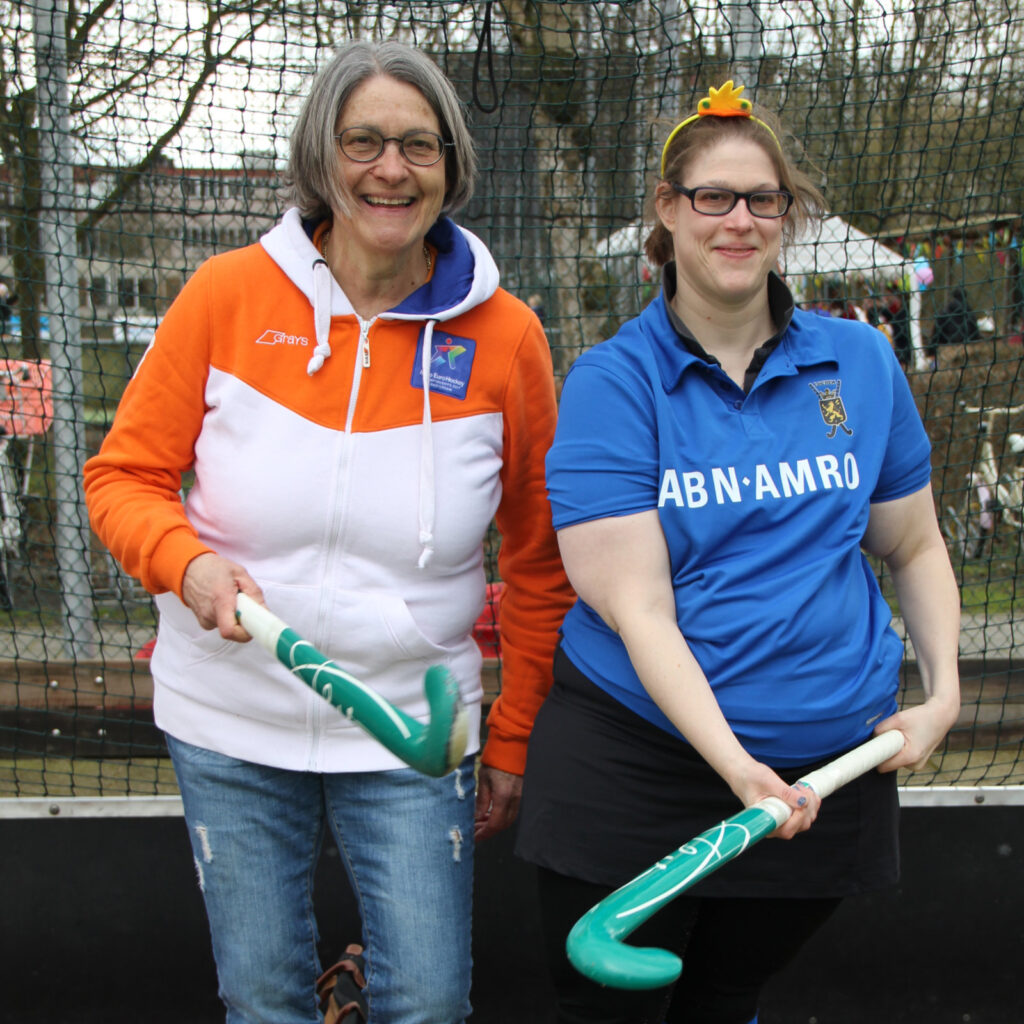
Seeing an opportunity, Elsbeth took action and founded the first G-hockey team at her club, laying the foundation for what would become a national and, later, a global movement.
The “G” in G-hockey stands for “gehandicapten” (Dutch word for “disabled”), but Ruys’s approach always focused on ability, joy, and belonging.
In the early days, things were challenging. Many doubted whether people with intellectual or physical disabilities could learn the game or enjoy it in the same way as others.
Ruys, however, was steadfast. recruiting parents and volunteers, adapted training methods, and created a welcoming environment where every player was valued.
The success of the first G-hockey team inspired other clubs to follow suit. She became a tireless advocate, traveling across the Netherlands to share her story, offer guidance, and encourage clubs to embrace inclusivity.
Her friend Marlène Döderlein de Win said of her impact: “Her attitude is taking people with disabilities seriously in their striving to improve their overall- skills. Elsbeth always sees the potential of every player.”
Elsbeth went on to work closely with the KNHB, serving as a committee member and technical delegate, to ensure G-hockey was fully integrated into Dutch hockey culture.
Her approach was hands-on, tailored to the players and their needs and abilities, organising tournaments, provided coach training, and built a network of parents and volunteers.
By 2025, more than 80 clubs across the Netherlands have established G-hockey and Parahockey teams, making the sport accessible to hundreds of players. Her dedication did not stop at the Dutch border, becoming involved internationally with other hockey federations and, later, with the Special Olympics, serving as a technical delegate and advisor.
She has helped shape international standards and practices for inclusive hockey worldwide and played a pivotal role in organising and supporting international tournaments at the Special Olympics World Games, helping to elevate the profile of inclusive hockey.
Her daughter Stefanie pays the ultimate tribute, saying: “Her legacy is not just the more than a thousand of players with disabilities worldwide now enjoying hockey, but the cultural shift she inspired—a shift towards greater acceptance, and an inclusive community in the sport.
“Her work reminds us that the true spirit of hockey—and of any game—lies in opening the field to all who wish to play.”