

Norway’s hockey community continues to make impressive strides in its development journey — fuelled by the EuroHockey Solidarity Grant programme.
After focusing previous grants on umpiring (2023) and coaching (2024), the Norwegian Hockey Federation turned its attention this year to club development, with a particular emphasis on volunteer engagement and building stronger organisational structures.
Recognising the critical role of volunteers in sustaining the sport, EuroHockey recommended that Norway collaborate with the Royal Dutch Hockey Association (KNHB), who have successfully supported similar projects with other National Associations.
The timing aligned perfectly: Norway had also applied for an Erasmus Mobility grant to enable club and youth leaders to visit the Netherlands to observe best practice in action.
A Collaborative Learning Weekend
This collaboration culminated in a memorable weekend during Norway’s outdoor championship event in Oslo, when KNHB experts Eline van Zinnicq Bergmann and Sascha van den Wall Bake travelled north to deliver two days of interactive workshops.
Thirteen representatives from seven clubs attended, including delegates from Bergen and Trondheim, two emerging hockey regions beyond Oslo’s traditional base.
The workshops addressed one of Norwegian hockey’s biggest challenges: over-reliance on a handful of volunteers. Many clubs currently depend on one or two individuals to manage the bulk of their activities, a model that can easily lead to burnout.
Eline and Sascha shared how Dutch clubs have evolved their volunteer structures, spreading tasks more evenly and embedding appreciation and community at the heart of club culture.
The sessions prompted lively discussion and concrete ideas that participants began implementing immediately.
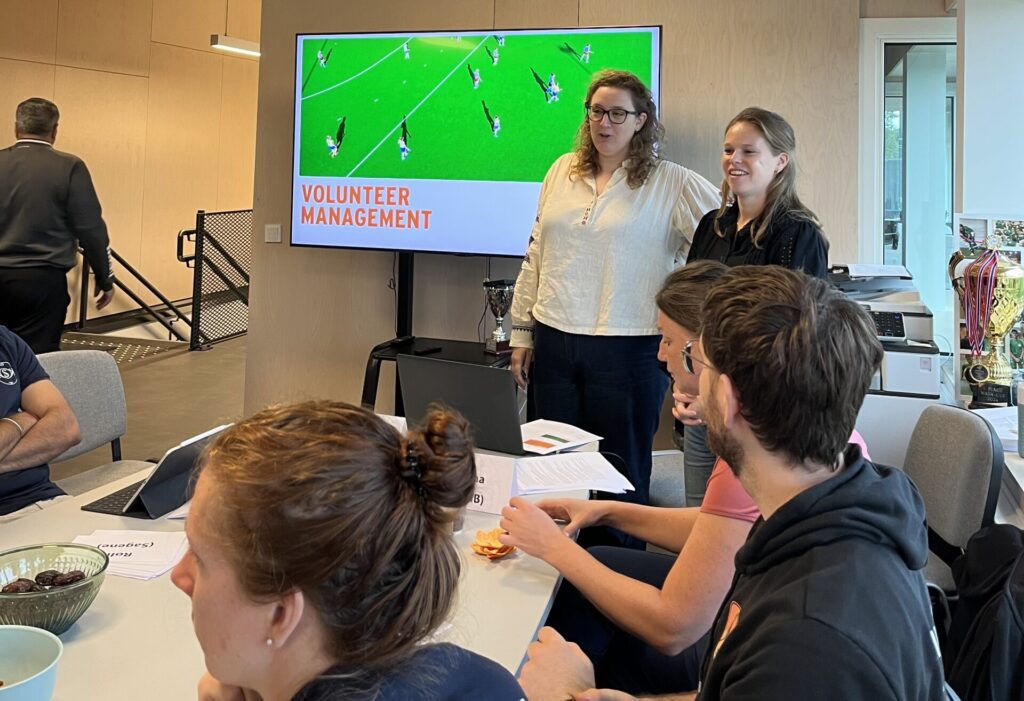
** The KNHB contingent presenting in one of the workshops
Michaela Schmidt from Trondheim reflected: “The workshop provided us with new perspectives and approaches to managing our club.
“As a very small club with around 30 members — many of whom are temporary — a lot of the management falls on just a few people.
“After the workshop, we decided to look more closely at how tasks are distributed and how short-term members might also contribute, even in small ways. It reminded us of the importance of showing appreciation to every volunteer and supporter.”
For others, the impact was felt even more directly.
Fahad Kayani, youth leader and U16 coach at Furuset Landhockeyklubb, said: “The course with the KNHB in Oslo and the field trip to the Netherlands were an eye-opener in how we can involve volunteers in hockey. At our club, we did not have involvement from parents.
“Straight after the course, we set up a meeting with all the parents to show them how they can engage in their kids’ sport. It was received very positively — we even played a match with parents against the kids!
“For an upcoming friendly tournament in Sweden, two parents will now travel with us as guides.”
For the KNHB experts, the experience was equally rewarding.
Eline van Zinnicq Bergmann, Senior Strategy & Policy Officer at KNHB, said: “It was impressive, informative, and motivating to observe how much can be accomplished with determination and a positive mindset, even where hockey is not yet a mainstream sport.
“While the number of players and facilities differ, Dutch and Norwegian clubs share many of the same challenges. Learning about the Norwegian context reminded us of the value of community and flexibility — we didn’t just share our knowledge, we also took away valuable lessons ourselves.”
The programme will conclude later this year with a series of digital sessions to reflect on progress, share updates from each club, and provide final guidance from the KNHB.
Strengthening Scandinavian Connections
Beyond the Solidarity Grant, Norway has made regional collaboration a key pillar of its development strategy. In recent years, the Norwegian hockey has prioritised building stronger Scandinavian ties, ensuring that clubs across the Nordics and Baltics are connected through shared activities, friendly tournaments, and ongoing dialogue.
One standout example is the growing partnership with Sweden. Initially, this involved friendly exchanges between Oslo-based clubs and Valhalla HC from Gothenburg, only a three-hour drive away.
But the collaboration quickly deepened thanks to regular conversations between Sebastian Vonen Skaugvoll (Norwegian Hockey Federation) and Colin Ingram (Swedish Hockey Federation).
With Norway’s first water-based pitch opening in late 2024, the timing was ideal to expand competitive opportunities. Sweden joined the Norwegian U16 league, fielding a mixed team drawn from players across the country.
Over two weekends in Oslo, the Swedish side not only competed but went on to win the league title.
Sebastian Vonen Skaugvoll explained: “In Norway, we often see the same three clubs playing each other repeatedly, which isn’t always exciting for the kids.
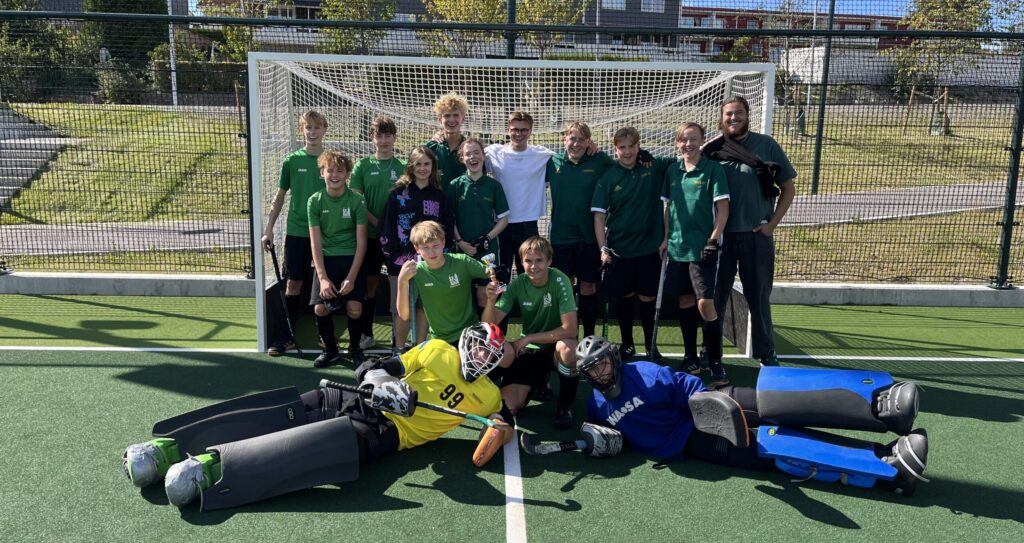
** Players from Lunds LKH Nayan and Valhalla HC forming part of the Swedish contingent to compete in the Norway
“By inviting Sweden, we wanted to make the league bigger, more diverse and more fun — keeping players motivated and giving them a sense of international connection. It’s also about building a culture of collaboration in Scandinavia. I see many opportunities to replicate this for other age groups and formats.”
Colin Ingram added: “This initiative has been a fantastic example of how two small hockey nations can work together to give their young players new experiences. The enthusiasm shown by everyone involved has been inspiring, and it’s only the start of what we can achieve by joining forces.”
The momentum has already continued. Sweden’s Mesaicos HC women’s team travelled to Oslo for friendly matches in preparation for their EuroHockey Club Challenge in Copenhagen, while Partille HC is set to join the U14 indoor league this winter.


