
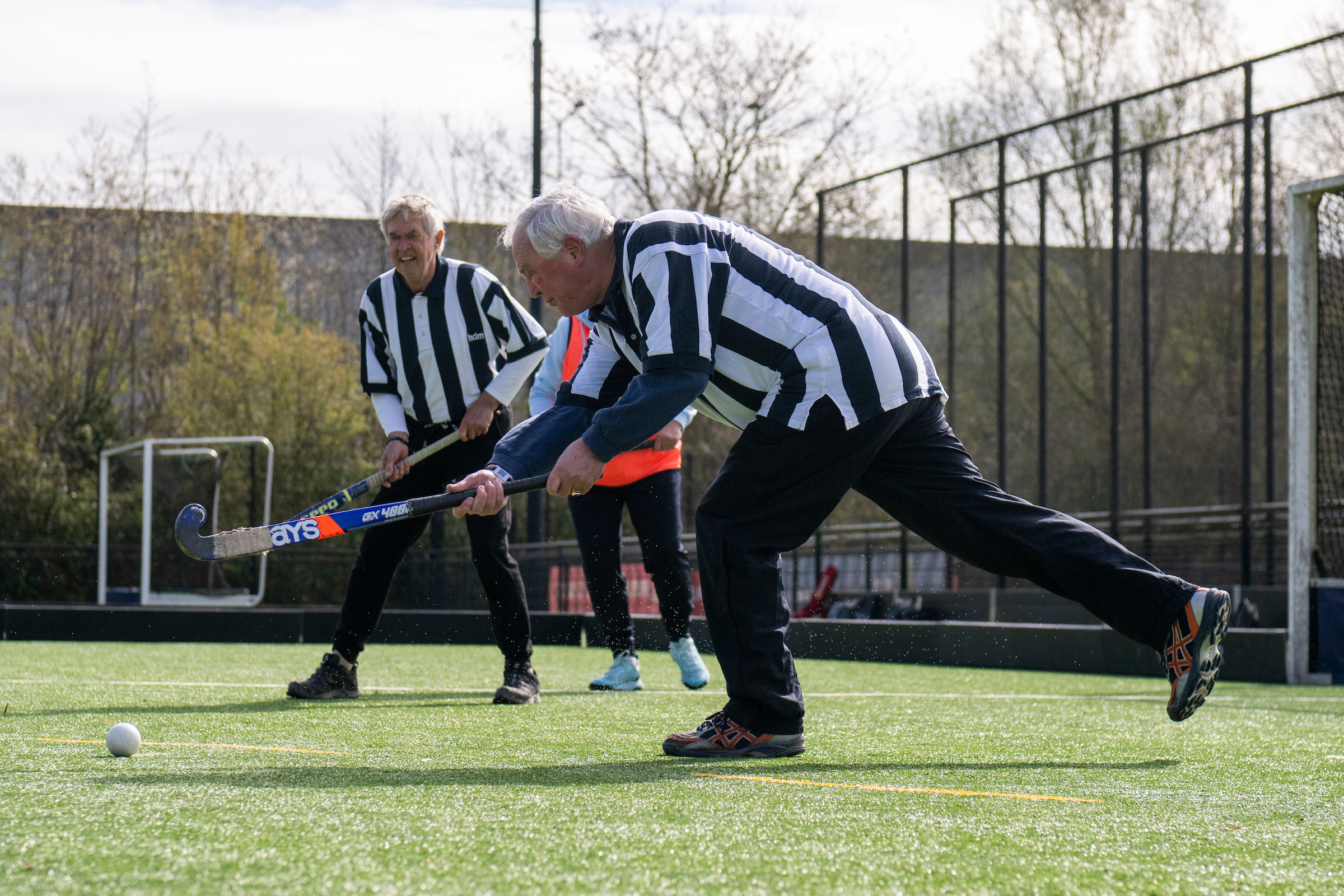
Walking hockey is growing steadily across Europe. For many, it offers a way to stay involved in the sport after they have stepped away from the traditional game, whether because of injury concerns, age, fitness levels, or simply changing priorities.
Yet despite its increasing popularity, there is limited scientific research about what walking hockey actually demands of those who play it and the benefits it can offer.
That gap in knowledge is what inspired Edinburgh Napier University lecturer and researcher Dr Tom Johnston to begin a new study into the physiological demands of walking hockey, supported by a €2,000 EuroHockey Institute Academic Research Grant.
For Johnston, the project sits at the intersection of two long-standing passions: hockey and research.
“I’m a hockey player, coach, hockey coach educator, and I’ve been around hockey teams of all levels for the last 25 years or so,” he explained.
Alongside his coaching career, Johnston has built an academic background that includes a PhD focused on non-contact injuries in hockey.
Through that work, he became increasingly aware that many people eventually move away from competitive sport, not because they lose their love for it, but because the physical demands become difficult to balance with everyday life.
“People do get injured or stop playing or withdraw completely or partially because of the fear of injuries,” he said. “Some people just want to play in a way that is suitable for them. It fits their lifestyle but keeps them involved somehow.”
That is where walking hockey comes in.
“Like other walking sports, it allows people to continue and it keeps the element of fun involved and enjoyment, as well as the socialisation,” Johnston said.
The idea for the research emerged after he became involved with Inverleith Walking Hockey Club in Edinburgh.
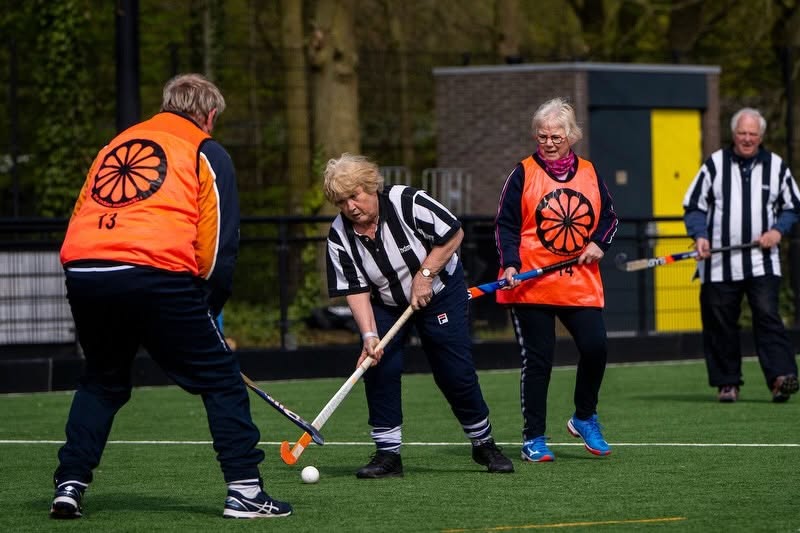
** Photos from last Easter’s walking hockey showcase at the EHL in Den Bosch. Pictures: Frank Uijlenbroek
“I got involved with a club in Edinburgh that has a walking hockey section and I thought that would be quite interesting,” he recalled.
“I’ve heard a lot about walking football and I’ve heard a lot about people needing to continue to take part in physical activity. I started exploring it from there.”
What he found surprised him.
“I started thinking there’s no information at all on how strenuous it is, what exactly is involved.”
That absence of evidence matters because walking hockey is increasingly being viewed as a way for people to remain active later in life or after health issues.
Johnston believes better information could help coaches, clubs and health professionals understand where walking hockey fits within the wider physical activity landscape.
“For people recovering from a cardiac episode, whether it be a heart attack or angina, they think: what can I do to stop this happening again and increase my cardiovascular health?” he said.
“I want walking hockey to be part of the list of things people can do after rehabilitation finishes.”
While there is growing research around the benefits of walking football, Johnston found that walking hockey remains largely unexplored academically.
“I’ve done some desktop research and I’ve come across no scientifically conducted research that’s been published into this area,” he said.
There has been some work examining the psychological benefits of participation, but Johnston believes understanding the physical demands is the essential first step.
The study itself is designed to answer that foundational question. Following ethical approval, Johnston will work with existing walking hockey players, asking participants to wear GPS tracking devices during normal sessions.
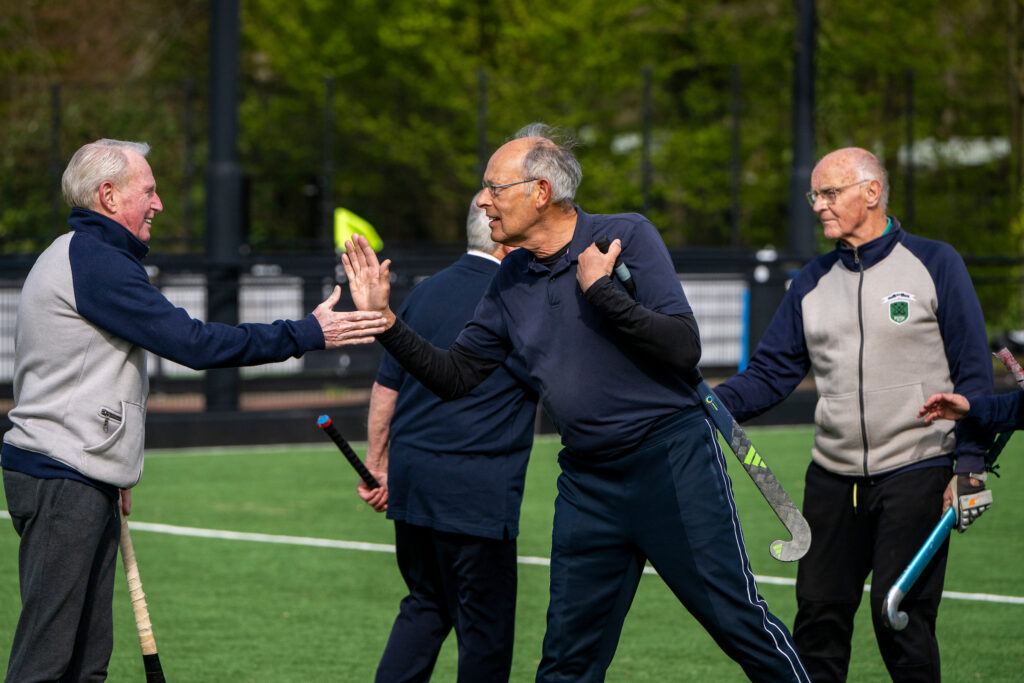
Walking Hockey
Picture:
WORLDSPORTPICS COPYRIGHT FRANK UIJLENBROEK
The collected data will allow him to analyse movement patterns and physical outputs during play, creating an evidence base that currently does not exist.
“People wear the vest, they play hockey, I download the data afterwards. Analysis, reports done,” he says with a smile. “Sounds so simple.”
Although this will be the first full study of its kind in walking hockey, Johnston brings considerable experience to the project. Previous research has examined the intensity of hockey training sessions compared to competition play while his academic work regularly involves research methodology and sports science.
As a result, he sees this project not as an endpoint but as the beginning of a wider body of work.
“In walking football they’ve gone another step, looking at vascular health and the potential to reduce the progression of dementia,” he said. “There are various strands it can take after this study.”
Interest is already emerging beyond hockey itself. Johnston has discussed the project with Chest Heart & Stroke Scotland, which currently promotes activities such as walking football.
“They’re very interested because they promote walking football as an activity,” he said. “Hopefully walking hockey can become part of their knowledge and their signposting to help people recover from ailments and as a preventive measure as well.”
For EuroHockey, the project represents an opportunity to develop a stronger understanding of one of the sport’s fastest-growing participation formats. For Johnston, however, the motivation remains straightforward.
At a time when more people are looking for accessible ways to remain active, connected and involved in the sport they love, he believes walking hockey deserves the same attention that other adapted sports have already received.
“People are genuinely walking and genuinely playing hockey,” he said. “I think it will be something that’s useful to academics as well as practitioners.”


