

When Dutchman Gino Schilders arrived in Prague at 27, he wasn’t following a grand plan. “I wanted to go on an adventure,” he says.
With a sleeping bag in the car and three possible destinations in mind – Ireland, Russia, and Czechia – he chose Prague, a city he knew only from accompanying his father on business trips and from a youth hockey camp.
“I just wanted something completely different,” he said, beginning what would be a new horizon at the heart of hockey in the country, ultimately spending 16 years as the the national federation’s president.
Those early months were shaped by immersion: learning the language, finding a job, joining a club, and discovering a community.
“I was learning Czech from day one… on the pitch you hear a lot, first the dirty words,” he laughs, “and then the menu in the Italian restaurant on the way to the pitch.”
Before long, he had joined Slavia as a player and was coaching seniors, then the women’s national team, and later the men.
One decisive moment pushed him from coaching into federation leadership. When the Czech women qualified for the A‑division in Amsterdam, he was proud but uneasy.
“I asked for a few extra trainings… but they answered they were happy we made it to the A-Division and that no extra trainings were necessary. I couldn’t look the girls in the eyes if we went there to lose 20–0.”
He stepped down from the coaching role but, instead of venting frustration, he and a group of friends channelled it into action.
“It’s easy to complain,” he says. “But let’s give some more constructive inputs.”
Schilders, still relatively unknown, stood for election and became president. With hindsight, he calls himself “a white paper”: someone neutral enough to be acceptable to all sides to implement change.
From the outset, Schilders believed that Czech hockey would only progress if it strengthened its foundations. Competitions would always run, he reasoned, but development required deliberate investment.
The federation’s resources were limited, so he made an early, symbolic decision: when the secretary‑general position became vacant, he replaced it not with another administrator, but with a full‑time youth development coach.
The message was clear—investment belonged on the pitch. Youth numbers reflected that shift.
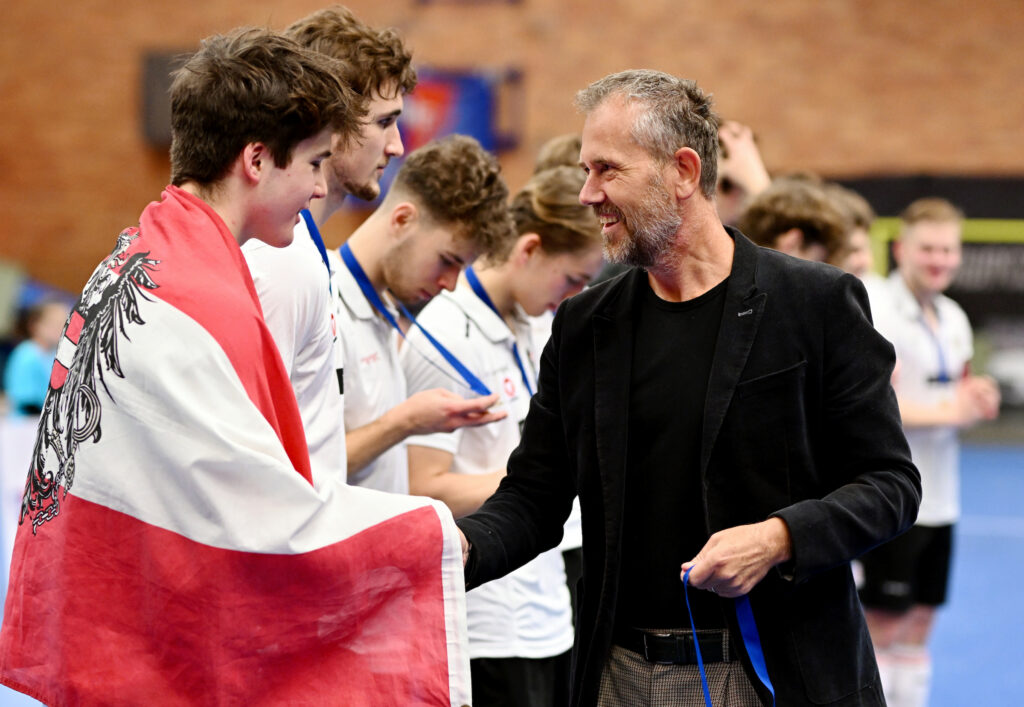
Presenting medals at the EuroHockey U21 Indoor Championship in Nymburk. Pictures: World Sport Pics
The absolute figure was modest by big‑nation standards, but its impact was profound. Those cohorts now form the backbone of fuller youth leagues and stronger domestic competitions across the country.
Schilders believes that coaches determine whether players stay or leave the sport. “Nobody leaves a good trainer,” he says.
He championed improved education, international exposure and the sharing of expertise from abroad.
A more skilled coaching base brought greater consistency across clubs and, crucially, helped stabilise retention during the teenage years, the period when Czech hockey had traditionally lost the most players.
While clubs led most infrastructure projects, the federation provided guidance, advocacy and, where possible, financial support. Over the following years, pitches improved, clubs modernised their structures, and competition management became more robust.
The overall environment – from officiating to youth pathways – became more reliable and better organised.
When he took office, he observed that Czech hockey “was quite closed… very focused on running the competitions and the national teams.”
His aim was to open windows rather than knock down walls. More tournaments were hosted on home soil, and clubs were encouraged to engage more with European networks and especially to focus on getting new members.
“I think we should be more open to Europe,” he recalls insisting. Through exchanges, seminars, and committee work, Czech hockey became more visible internationally.
“Some said we should focus on hockey in Czechia but hockey is developing fast and focusing mainly on your own country will leave you behind in the hockey world very fast. Isolation is not a smart decision.”
The indoor game thrived, too. “Czechs like indoor. You only need eight good players. Outdoor is harder, you need physical depth.”
Even so, both the men and women reached the A divisions at points during his tenure. “It’s not a structural achievement yet,” he cautions. “But with a good generation and a good goalie, you can do it.”
He is candid about the challenges. Funding systems limited long‑term planning; the number of clubs remained relatively stable; and growing the sport in a crowded youth landscape remained hard work.
Some critics felt he focused too much on national teams because that is where grant money often had to be spent. He accepts the perception but remains firm in his philosophy: if given full freedom, he would always invest first in youth.
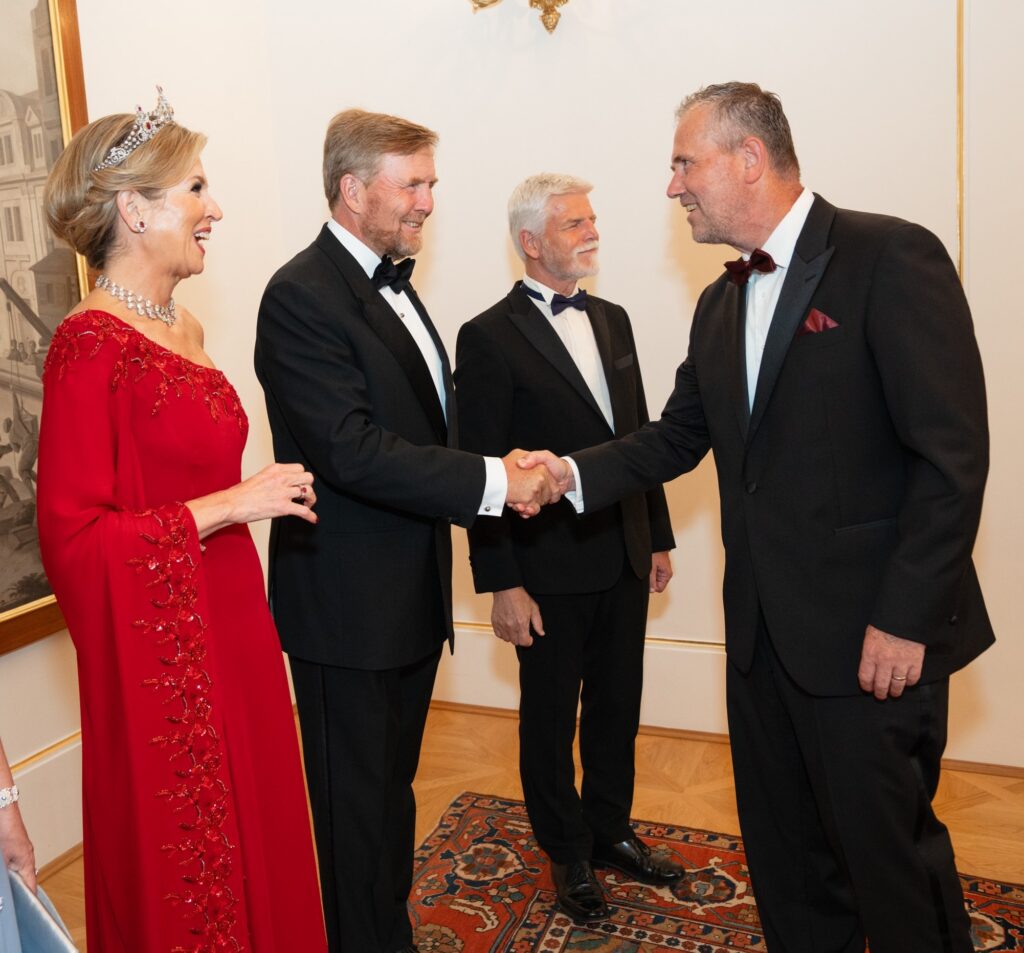
Gino meeting with Queen Maxima and King Willem-Alexander of the Netherlands and Petr Pavel, the president of Czechia
“Of course, the national team matters,” he says, “but that was never my main role. I always saw it as: how can we grow, how can we get more people involved?”
Yet, over 16 years, the sport’s culture shifted. The federation moved away from a pen‑and‑paper operation towards a more open, structured, development‑led organisation.
He is proud of the cultural shift he helped spark. “The level of trainers went up. Governance improved. Education improved. Opportunities improved.”
He smiles at the idea that his leadership was seen as more dynamic than what came before. “It wasn’t that the old group did a bad job,” he insists. “It was simply time to move forward.”
Schilders admits that stepping down was emotionally complicated after such a long tenure as a new board, led by new president Michal Toms, was elected last December.
Despite moving on, he does not dwell on it too much. The foundations he helped lay – youth programmes, improved coaching, a broader outlook – remain firm.
“You can see now the effect of what started 16 years ago,” he says. “That is what matters.”
And he will not be far from the game as Schilders continues to contribute to European hockey through Erasmus+ development and grant‑funded programmes with EuroHockey, work he has been involved in for many years.
He helps design ideas, write Erasmus projects and advise federations on development pathways.
“I love to come up with new ideas on how to grow our sport and connect people and organisations to find ways how to get more people enjoy sports.”


