

On April Fool’s Day 2018, Simon Webb woke to tingling fingers. By day three, his arms and legs were numb; he was soon “in hospital blind with organ failure and completely paralysed.”
Those episodes and the recovery that followed, reshaped his life—and his lens on hockey and beyond.
“It really did give me insight,” he says. “Trying to catch the underground in London looking fine and coming off it unable to talk or walk properly… being in meetings and not remembering what was discussed seconds later.”
It is a story he told last month as one of the keynote speakers at the EuroHockey Development Committee meeting in Brussels, recounting how it has played an integral part in his understanding and advocacy of equality, diversity and inclusion in sport and life.
The talk was timely, coming two months after the launch of EuroHockey’s Inclusion Charter and Foundation with the latter initiative’s vision to “to empower individuals and communities across Europe through hockey”.
Simon’s story is a rich hockey-tapestry: umpire, photographer, coach, administrator; brand strategist and EDI advocate; patient finding his way back from the edge.
Disability, once abstract, became lived reality. The common thread is inclusion—not as a poster on the wall, but as the sum of a host of small decisions that either open doors or shut them.
Allyship that keeps people in the game
Early in his return, Simon attended his first national umpires’ conference in England – an event and status he’d worked toward for years. The organisers shared his medical story with the entire room, revealing some of the intimate details of his recovery.
That evening, a senior figure “started hurling abuse… teasing me about how I nearly died.” Simon froze—until international umpire Ali Keogh stepped in. “She physically put herself between me and the guy and told him in no uncertain terms where to go.”
It was more than a kind gesture; it was a career-saving intervention. “What could have ended my intentions of ever being involved in umpiring… because of Ali’s intervention, I’m still here today.”
That moment becomes a motif throughout Simon’s work: the outsized power of “small, courageous acts” to keep people—especially those underrepresented or targeted—engaged and thriving.
Seeing the game from every angle
Simon’s path through hockey is unusually holistic. He grew up between the US and the UK, played and coached at Cambridge City HC, worked in hockey across the UK, France, Belgium and the Netherlands, served on committees, managed teams, and volunteered at European events.
As a photographer, he’s stood “intimately close” to pain and triumph, his images portraying the German women’s surprise win in 2007; a spontaneous celebration over the barriers; and the sting of Olympic qualification near-misses.
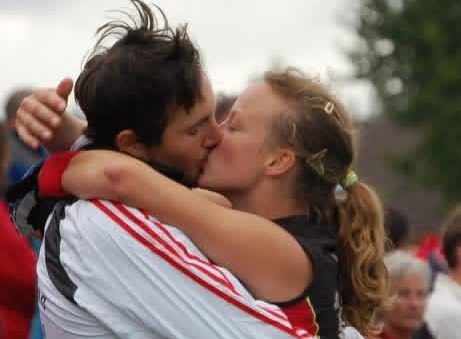
** Capturing a special moment at the 2007 EuroHockey Championships. Picture: Simon Webb
That proximity to vulnerability sharpened his empathy—and his conviction that access and dignity matter as much as tactics and talent.
As an umpire, he qualified in both Belgium and England and saw stark cultural contrasts.
In Belgium, “at club level you are treated like a god… they buy you beers, sing you songs.”
In England, officials often feel sidelined and national-level umpires aren’t paid. Neither model is perfect, he says, but the comparison shows how structures and norms signal who belongs, who is respected, and who is disposable.
Practical inclusion beats idealised statements
Simon’s professional EDI work began at Decathlon, where he pushed for changes that sound minor – but change daily experience. “One of my biggest frustrations was trying to get pockets into skirts.”
Meeting resistance, he used a simple empathy nudge: “Let’s safety-pin your pocket shut… and see how quickly you get annoyed.”
Within hours, people agreed. From there, he challenged representation in marketing imagery and helped shape the company’s 2030 vision through a social lens: access to sport, not just shiny tech.
That global work also taught him cultural pragmatism. On a rollout call in Egypt, he met immediate, heated resistance framed as a fear of western moral imposition.
Rather than escalate, he reframed: could they improve maternity support beyond legal minimums? Create sensory-friendly store hours for autistic customers?
“Yeah, we could do that,” came the reply. The lesson: start where people can move, build trust with feasible steps, and keep the door open for deeper change.
Measure, then improve—and tell the story
At the race-equality charity Sporting Equals, Simon helped reform the Race Representation Index – a data-led view of who’s in the room across boards, coaching, player pathways, and, crucially, officials.
“If you don’t measure it, you can’t improve it,” he says. The initial reaction from sports bodies was defensive. By reframing the Index from “gotcha” to progress tracking, it became a tool sponsors could back and organisations could learn from.
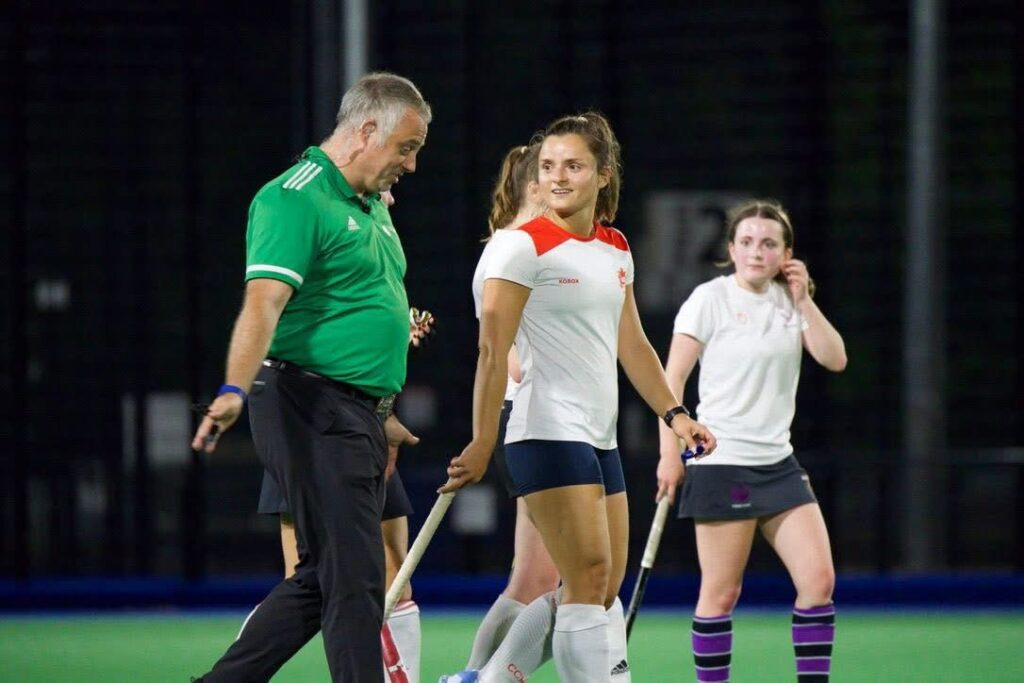
** Discussing a decision
In Scotland, the Leaderboard programme trained ethnically diverse candidates in boardroom skills and the practical use of legislation so presence isn’t token; it’s effective.
The through-line again is agency: give people the tools and legitimacy to shape decisions, not just sit at the table.
The officiating pipeline: where it leaks—and why
One slide from Simon’s talk landed particularly hard. In London, entry-level umpiring is roughly 50/50 men and women at the online course stage.
At on-pitch sign-off, it drops to about 30% women / 70% men. By the time officials receive neutral appointments, it’s roughly 5% women / 95% men. The leak isn’t talent; it’s culture. Simon recounted anecdotes from women and umpires of colour, a drumbeat of slights and slurs – some overtly racist or sexist, others couched as “helpful.”
“The overriding message,” Simon says, “was you are not welcome.”
Yet officials also hold unique power to make the game safer and more just. Simon shares a story from coach and former player Darren Cheesman: after a heavy foul against Cheesman, an umpire showed red.
Darren argued it was only yellow. The umpire replied: “You didn’t hear him—he called you the N-word.”
Filing that report was extra work and potential blowback—but it told Darren, indelibly, that officials had his back. “From that day onward he knew that umpires would protect him,” Simon says. That trust ripples outward.
Inclusive kit, inclusive pathways
Working with England international Tess Howard, Simon supported the move to inclusive sportswear, which began by challenging skirt/shorts norms in women’s hockey. The scope widened quickly: hijab-friendly kit; cost-aware choices that don’t exclude.
“It’s just removing barriers,” he says. “Choices that let more bodies, identities, and budgets belong on the pitch.
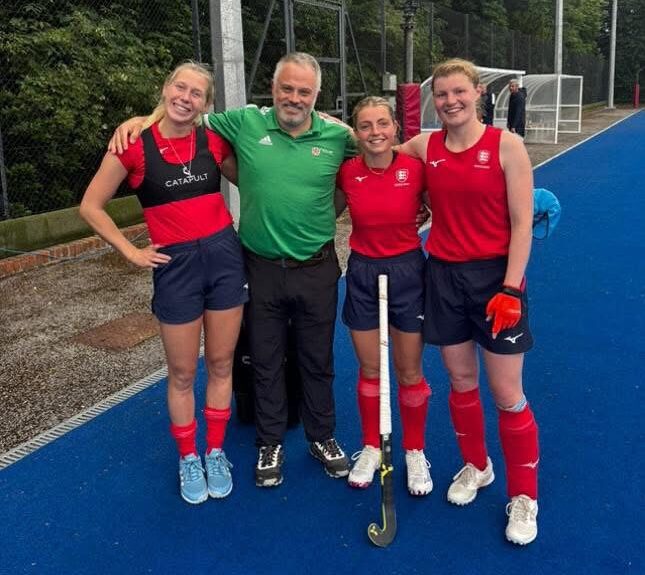
** Simon assisting with an England Hockey training session with Tess Howard (right) whom he worked with in the development of inclusive clothing
Internally, Simon applies the same logic at the biodiversity charity where he now works. There, 70% of staff are women but leadership isn’t yet reflective. For Women in Science Day, he pushed beyond a token post:
“Let’s not do a day, let’s do a whole week,” centring staff stories about the obstacles they overcame. Role models matter when they are visible, specific, and real.
What federations and clubs can do tomorrow
Simon’s advice is actionable:
- Find the right people; budget follows. “If you can find someone who really cares, they will make it happen… just say yes.”
- Don’t wait for perfect. Pilot now; iterate later.
- Collect the data. Track representation across pathways—including officials—so you can target fixes and show funders progress.
- Tell the stories. Proactively communicate role models from your own community; celebrate wins to inspire the next wave.
- Make policies real. “If they don’t stand up to any tests… it destroys confidence.” Enforce them when it’s hard.
- Be context-smart. In resistant settings, start with feasible steps (parental policies, sensory-friendly environments) that build momentum.
- Fix the pathway, not just recruitment. Mentoring, fair appointments, and culture change at the touchline matter as much as sign-up numbers.
The last word: courage at human scale
Near the end of his talk, Simon circles back to Ali Keogh’s intervention—and to the umpire who protected Darren.
“What might seem like a really small, easy thing for you could make the biggest difference to someone else.”
That is the heartbeat of EDI in sport: not grand statements, but everyday courage—on the sideline, in selection meetings, at a design table about pockets in a skirt. Do enough of those small, human things, consistently, and the game changes.


