

EuroHockey representatives were in Luxembourg recently to test the latest version of the immersive virtual reality tool being created by the Erasmus BESST 2.0 initiative.
BESST 2.0 is an innovative cross-sport project focused on strengthening awareness and prevention of unsafe sporting environments through immersive virtual reality (VR) technology.
By placing athletes and coaches directly into simulated real-life scenarios, the project aims to improve understanding of psychological transgressive behaviour in sport and support the development of safer, more respectful sporting cultures across Europe.
EuroHockey wants to ensure that all members of our European hockey family can enjoy hockey in a safe environment and therefore is working hard to create awareness of this important topic.

It is being developed in conjunction with ice hockey, volleyball, jiu-jitsu and hockey organisations, reflecting a shared commitment across sports to address safeguarding challenges in a modern and engaging way.
A key objective of BESST 2.0 is to explore how VR-based learning tools can shift perception and behaviour by allowing users to experience realistic, pre-designed scenarios that replicate situations athletes may encounter in high-performance environments.
These include cases involving psychological boundary crossing and other forms of inappropriate behaviour that can occur in sport settings.
A central technology partner in the project is the University of Twente, which is contributing its expertise in immersive technologies and interactive simulation design.
Together with the sport stakeholders, the university is helping to develop VR scenarios that are both realistic and educationally impactful.
The VR tool is designed to fully immerse users in lifelike sporting environments where they must recognise, interpret, and respond to complex interpersonal situations.
Beyond awareness, the goal is also improved decision-making under pressure when faced with inappropriate or unsafe behaviour.
The most recent meeting took place at the premises of the European Volleyball Confederation. During this meeting, partners tested the latest version of the VR tool and reviewed the scenarios that have been developed to date.
Participants were able to experience the simulations first-hand, providing valuable feedback on realism, emotional impact and educational effectiveness.
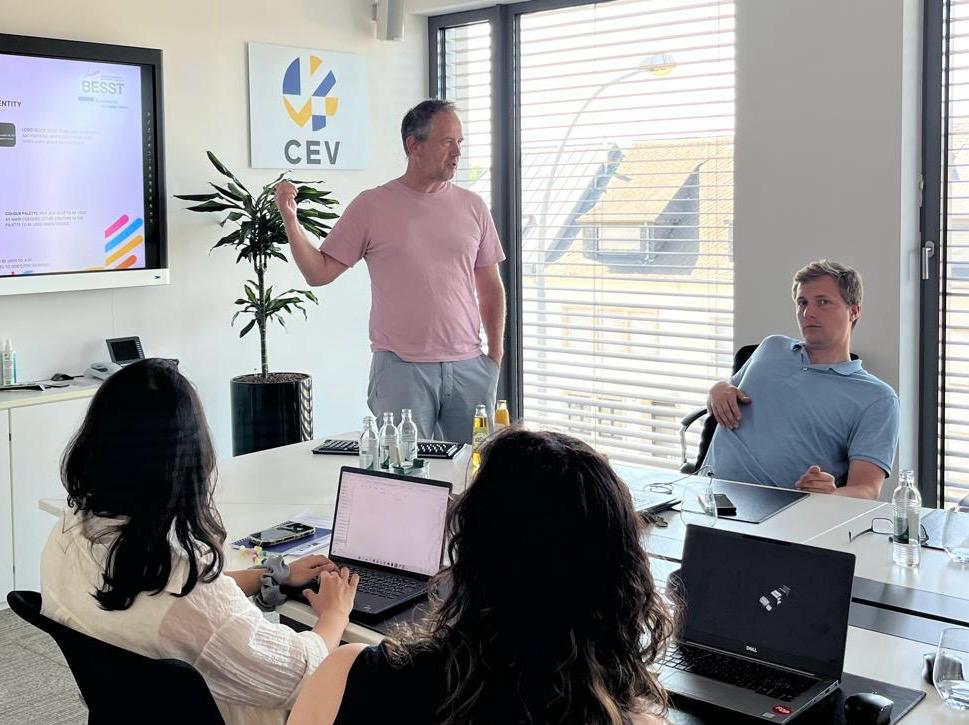
** EuroHockey consultant Gino Schilders presents during the meeting Luxembourg
Alongside the technical testing, the consortium also hosted a short masterclass on safe sport. This session focused on defining acceptable and unacceptable behaviour in sport environments and encouraged open discussion about safeguarding standards, athlete welfare, and cultural change in sport organisations.
The masterclass reinforced the broader aim of the project to foster shared understanding across sports communities about responsibility and respect.
Work is now underway to finalise the remaining VR scenarios and prepare logistical planning for the upcoming pilot phases.
The consortium is also refining the educational framework that accompanies the VR experience to ensure it aligns with broader safe sport objectives.
Later this year and in 2026, athletes of national youth and senior teams will be invited to try the VR experience hands-on during various international tournaments.
From the project coordination side, Gino Schilders, Cameron Findler, and Tom Pedersen from EuroHockey are closely involved in driving the initiative forward and coordinating collaboration across partners.
Find out more
The project Building European Safe Sport Together 2.0 is funded by the Erasmus+ programme from the European Commission. It builds on the results of the predecessing project BESST 1.0 that provided a unified definition (“transgressive behaviour”), legal safeguarding frameworks for sports organisations, and sports events organisers as well as a comprehensive awareness & education toolkit to use free access.
Find out more here: https://besst-safesport.eu/


