
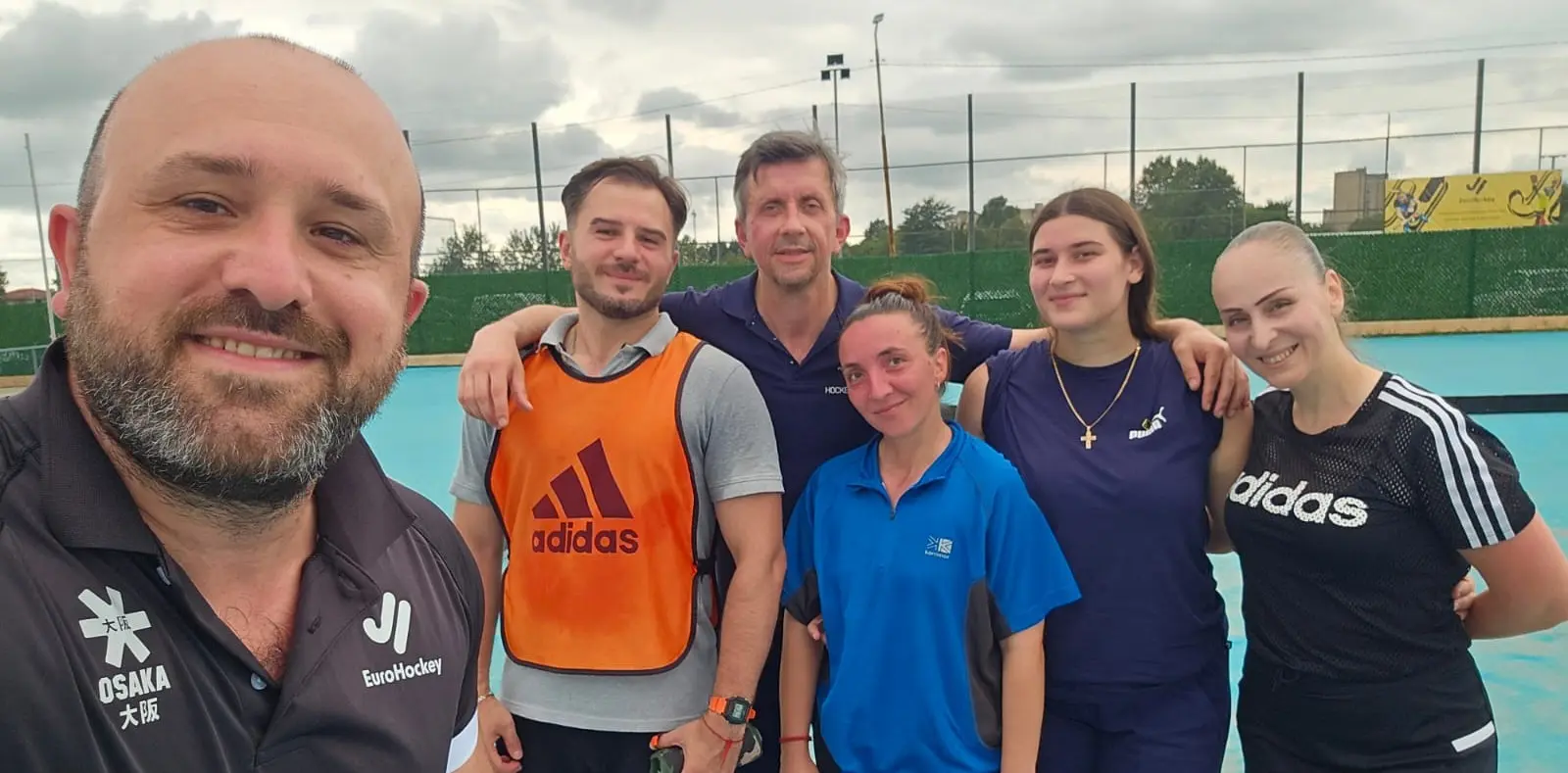
EuroHockey’s Development of National Coaching Systems (DNCS) programme continued its work across Europe with coach educator Tomislav Jamicic partnering with the Georgian Hockey Federation to help strengthen the country’s coach education system and build long-term capacity from within this summer.
The DNCS programme provides member nations with financial support and expert guidance to develop coaching structures that align with both the European Qualifications Framework and FIH Academy standards.
In Georgia, the focus was not simply on delivering a coaching course but on creating the foundations for a sustainable system that can educate and support future generations of coaches.
For Jamicic, the project stood out because of the clear vision already in place within Georgian Hockey.
“That’s the philosophy of EuroHockey with these kinds of projects,” he explained. “There should be a long-term development strategy and long-term coaching development.”
He felt Georgia – through the work of Tornike “Toko” Tevdoradze – was well positioned to benefit because the federation had already identified where it wanted to go and how coaching could achieve those ambitions.
“They are willing, they have a plan, they know what they want,” Jamicic said. “Toko has a really good vision.”
A central component was the development of future coach educators. Five participants, including Toko, were selected from across the country to take part in an experience-based learning pathway. Importantly, they represented four different regions where hockey is currently played.
Tevdoradze sees that regional spread as one of the programme’s greatest strengths.
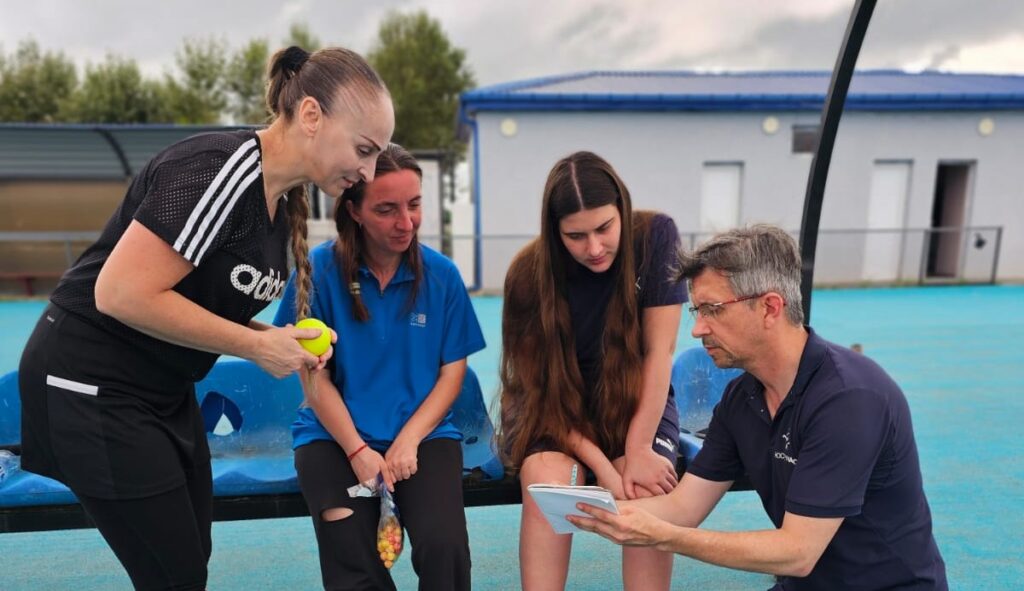
** Educator Tomislav Jamicic offering feedback
“One of the key decisions was to select the participants from different regions of Georgia,” he said. “This gives us the opportunity to take the programme beyond Tbilisi and reach a much wider area.
“If we have local developers working in different regions, we can train and support more coaches locally and create opportunities for new teams to be established.”
The project combined an FIH Level 1 coaching course with a structured pathway towards coach development. Participants first strengthened their coaching knowledge before exploring what it means to support and educate other coaches.
“What I have been doing is giving them the experience they need to be a developer,” Jamicic explained. “The first part was about giving them the experience of a Level 1 coach and getting confidence in coaching technical skills. Then we build on that and put the experience of how to be a developer.
“So not only how to make players better, but how to make coaches better. What do you have to observe when you’re looking at a coach giving a session? How do you give feedback to the coach?”
The practical nature of the programme was one aspect that made a lasting impression on participants.
“There was a strong practical element,” Tevdoradze said. “From morning until evening, we were working with different exercises, explaining and delivering sessions to each other, and constantly changing our roles, moving from being a coach to being a developer and then back again.
“This gave us a much better understanding of what the developer role actually means and how different it is from simply being a coach.”
The approach differed from previous education experiences many of the participants had encountered. Language also presented a challenge with English not being the first language of the group.
“The participants’ level of English was relatively low,” Tevdoradze admitted. “But Tomislav’s very positive and supportive approach, together with my active involvement and support throughout the programme, helped us overcome this barrier.”
Jamicic’s emphasis extended beyond technical coaching content. He wanted participants to think about how coaches communicate, support players and help others learn.
Reflecting on his observations in Georgia, he noted that the traditional coaching style was often based on instruction and correction.
“It was very much ‘I tell and you do’,” he said. “It was also ‘I tell you what is wrong’.”
Through group work, practical coaching sessions and reflection, participants were encouraged to adopt a more collaborative approach.
“We worked on coach competencies and the soft skills,” Jamicic said. “How do you conduct a session? One of the things they talked about was giving compliments. They realised this was something they could improve. They were very open and eager to learn.”
That openness was something he repeatedly highlighted.
“They were open to feedback, even if it was something they could improve. There was no closing down or becoming protective. I really enjoyed that.”
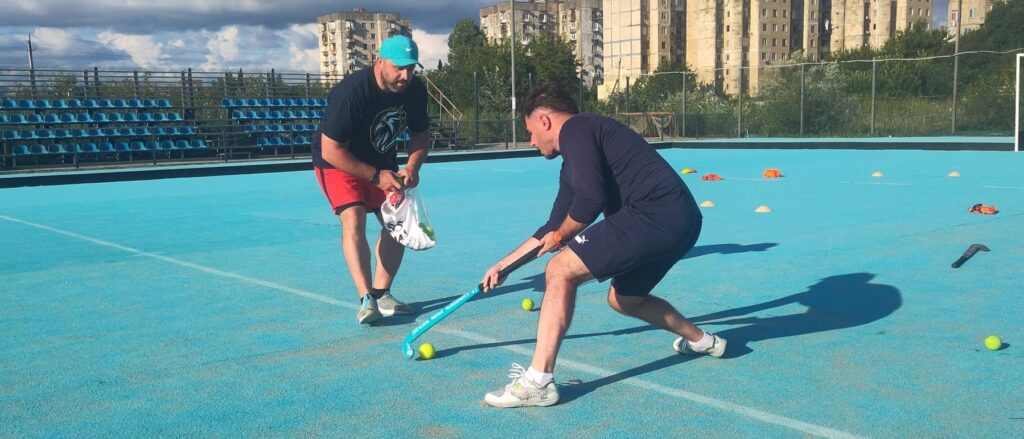
** Toko working on technical skills with a player
Tevdoradze similarly pointed to the learning environment as one of the programme’s greatest strengths.
“One of the biggest highlights for me was Tomislav’s approach to working with us,” he said. “We were very happy with the way he taught and supported us throughout the programme.
“The combination of practical work, discussion, feedback and changing roles made the whole experience very valuable for us.”
Another notable feature of the group was its diversity. Of the five participants, three were women and two were men, reflecting the strong role women continue to play within Georgian hockey.
Jamicic was impressed not only by the balance but also by the commitment shown by those involved. One participant, Tamta, completed the face-to-face phase of the programme while eight months pregnant.
“Talk about commitment!” he said with a smile.
Beyond the course itself, the project is designed to continue throughout the year. Participants have received ongoing tasks and mentoring support, helping them put their learning into practice within their own communities.
For Tevdoradze, the long-term objective remains clear.
“I always believe that, for the long-term development of hockey in Georgia, we need to have our own local developers who could continue developing coaches in the future,” he said.
“After this course, I feel that this was the right strategy.. The biggest value of DNCS is that it gives us the opportunity to build a sustainable coaching development system within Georgia,” Tevdoradze said.
“Instead of depending only on external experts, we can develop our own people who can continue sharing knowledge and developing other coaches.”
As hockey expands into new schools, towns and regions across the country, that network of locally trained coach educators could become one of the sport’s most valuable resources.
“In the long term, I believe this can help us reach more coaches, create more teams and bring hockey to more regions across Georgia,” Tevdoradze said. “For me, that is one of the most important steps towards the long-term growth of Georgian hockey.”


